
Matterhorn Ultraks 🇨🇭
The road to becoming an ultramarathoner doesn't usually start with a race bib; for me, it started with a camera and a heavy dose of humility.
Back in 2020, I was on a road trip in Chamonix. I was there to take photos, but I found myself captivated by a different kind of subject: trail runners. I watched them move like mountain goats, effortlessly shuffling uphill while I was gasping for air just trying to find a good vantage point. That was the spark. Fast forward through a TMB thru-hike, a few trail runs around Europe, some climbing trips, and I found myself standing at the starting line of the Matterhorn Ultraks Sky 50K.
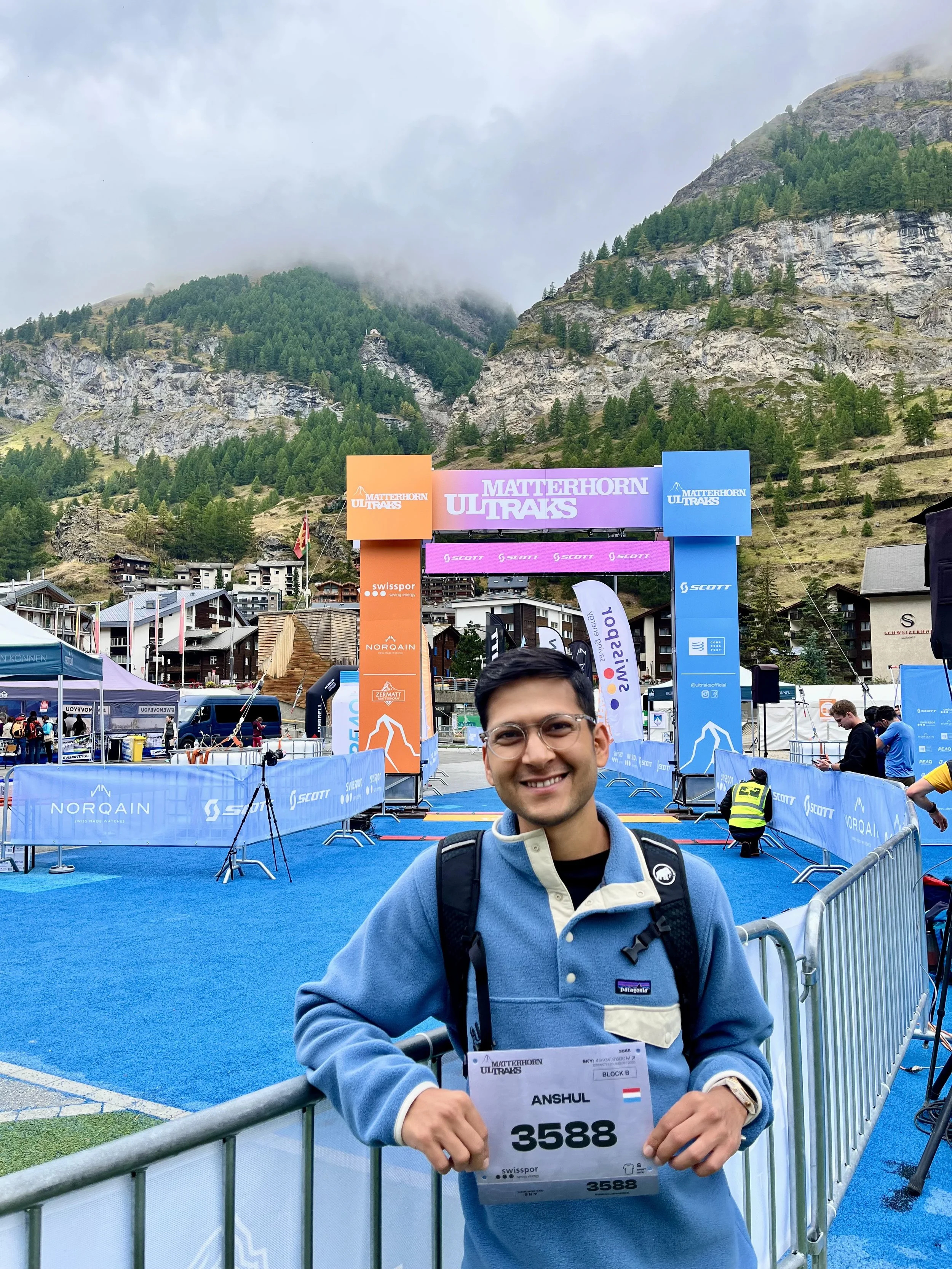
Collecting the bib the day before the race
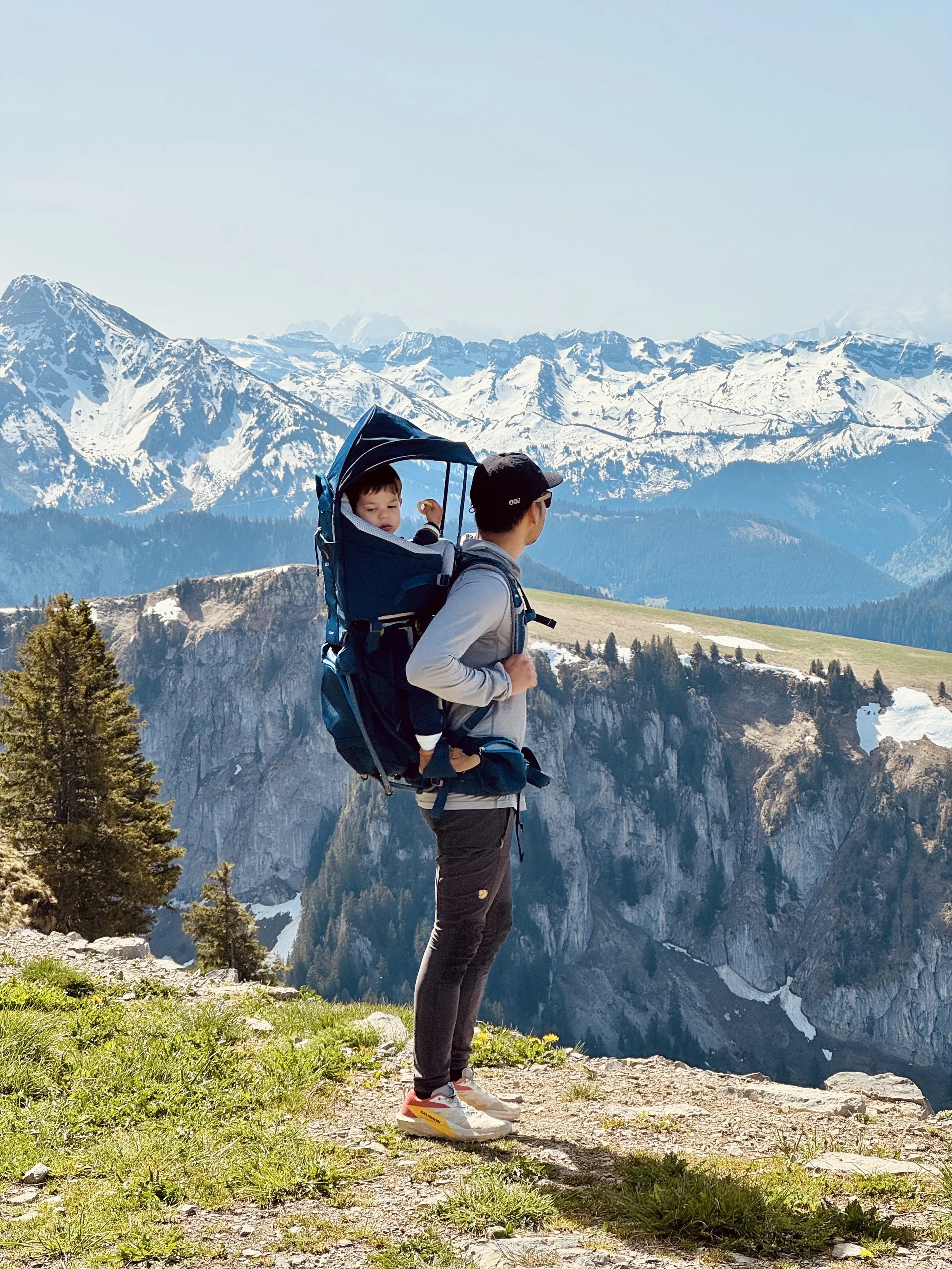
Hiking in the French Alps
The Math of the Mountain
On paper, the stats are intimidating: 50 kilometers and 3,600 meters of vertical gain. For a guy living in the "flatlands" of Luxembourg, those numbers require a special kind of creativity. Training started in February with my coach Kieren D’Souza, an elite trail runner hailing from my home country, India. I went from a struggling 20km a week to a a training volume of 60km.
But the real challenge wasn't the mileage; it was the "life" part of the equation. Being a full-time corporate employee and a dad to a three-year-old means your time is never truly your own. Training for 12–15 hours a week meant brutal prioritization. It meant long sessions on the StairMaster at the gym when I couldn't get to a hill, and it meant taking my son, Vian, up into the Alps in a carrier so I could get my vert in without sacrificing being a dad.
From Anxiety to Action
By the time I drove to Zermatt with my friend Ashik, I was a nervous wreck. I’ve never been this anxious before a race, mostly because I’d never invested this much of myself into one. My training logs showed 1,400km on foot and 40,000m of climbing. I had done the work; now I just had to do the run.
Of course, in true "amateur athlete" fashion, I arrived at the starting line late. At 7:00 AM, without a warm-up and still fumbling with my jacket, the horn blew, and we were off.
The Ridge and the Emotions
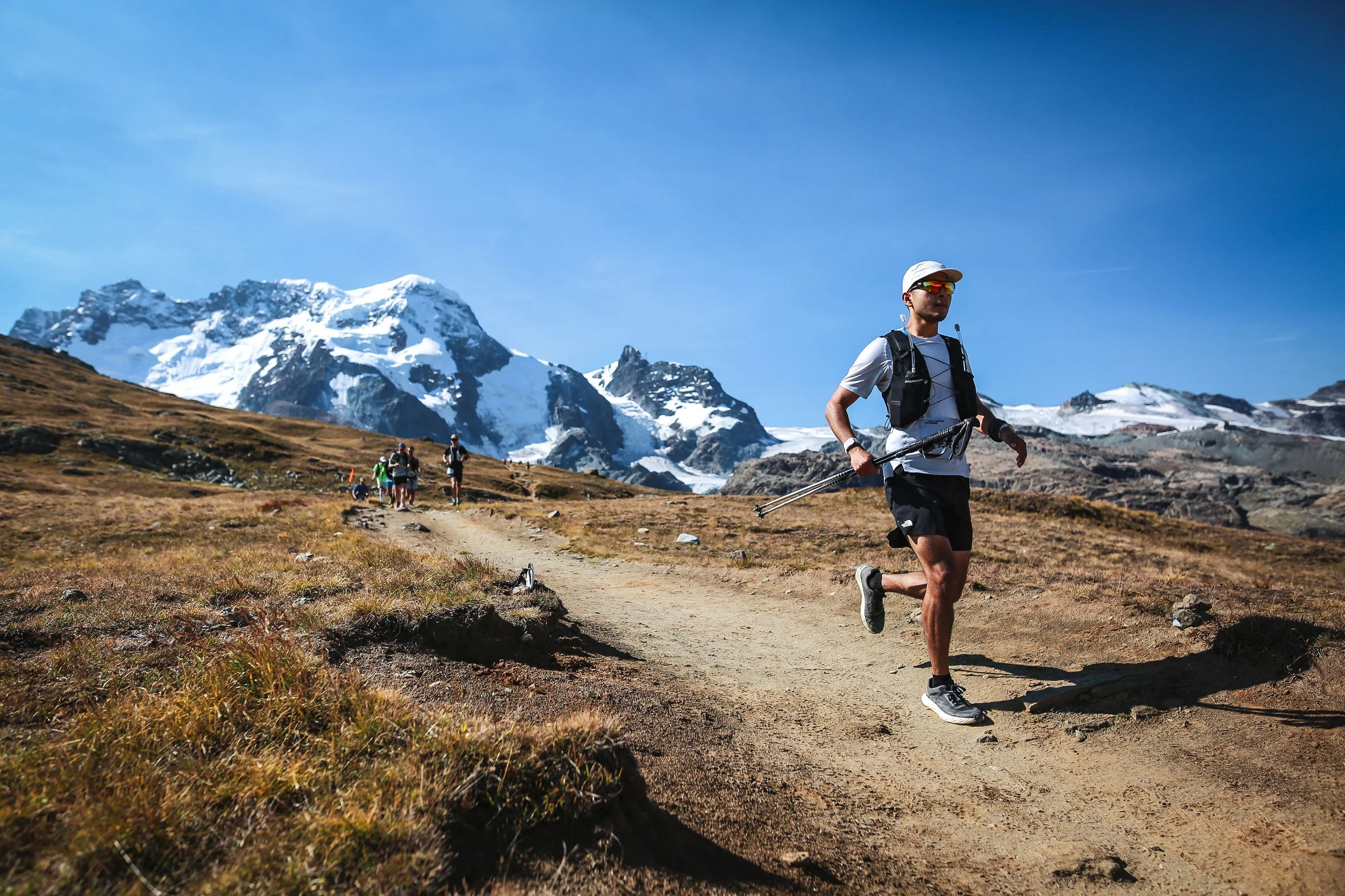
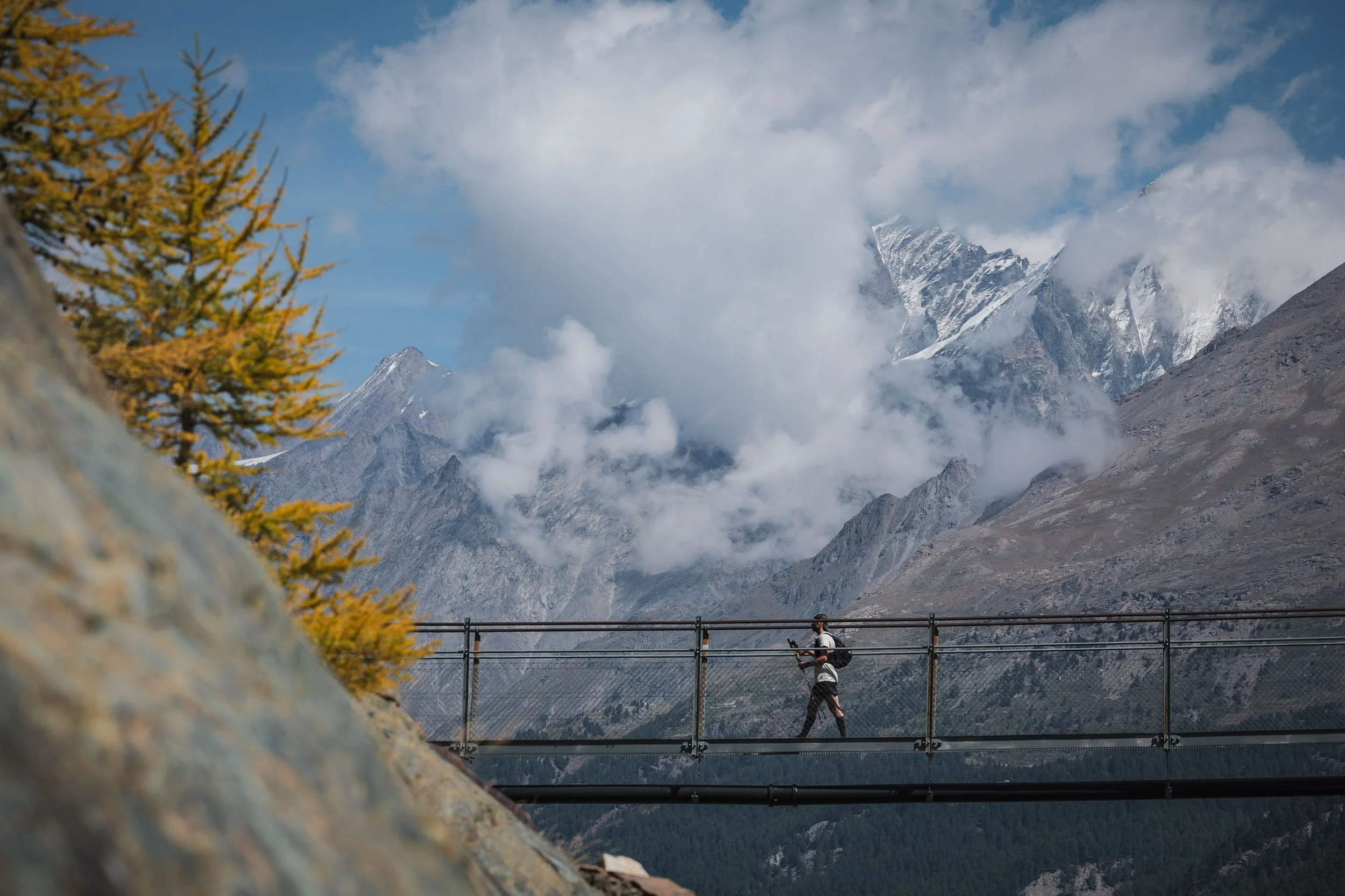
The race is defined by three massive climbs. I cleared Sunnegga feeling surprisingly fresh. But it was the second climb to Gornergrat, the highest point at 3,150m, that changed me.
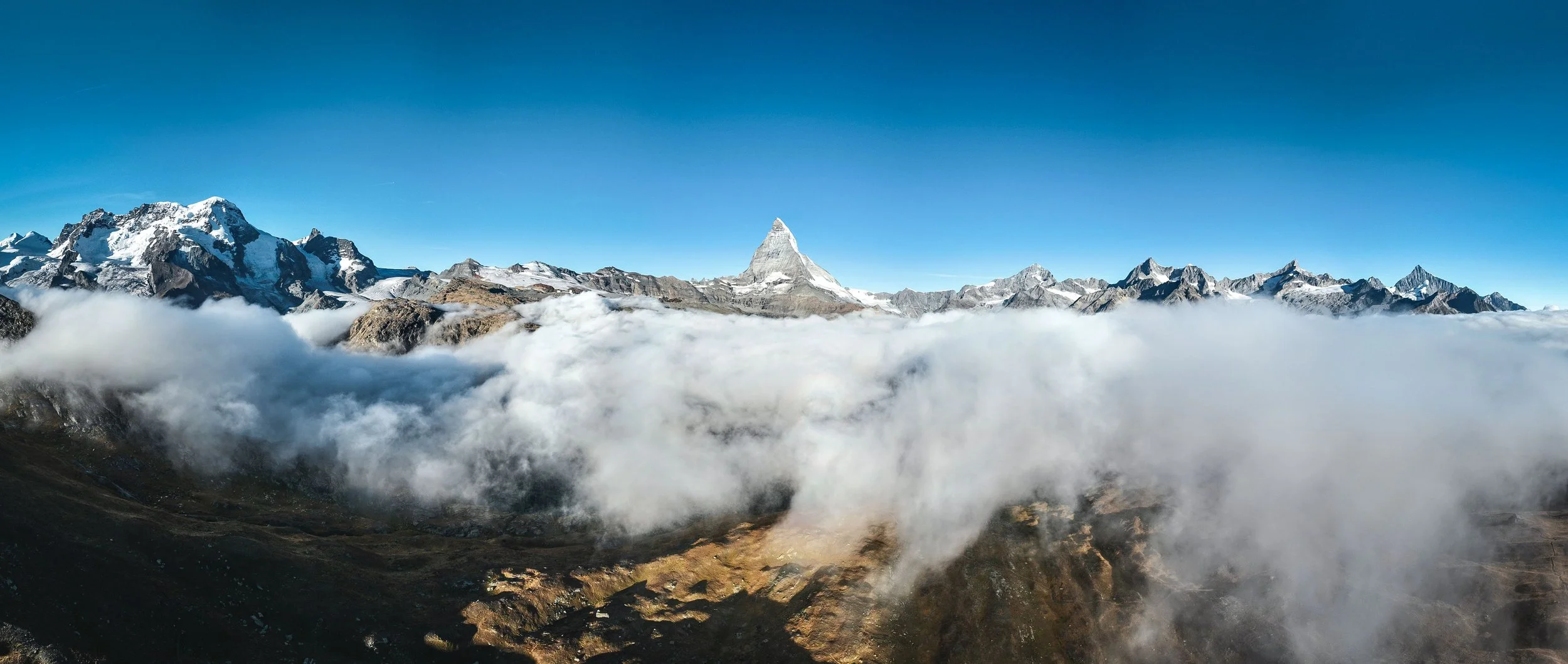
When I reached the ridge and saw the 4,000m panorama of the Alps, with the Matterhorn standing guard it, hit me. I wasn't just tired; I was overwhelmed. Tears started flowing, and for the first time, I wasn't thinking about my pace or my position. I was just grateful. Grateful for my health, for my family’s support, and for the sheer privilege of being able to move my body in a place this beautiful.
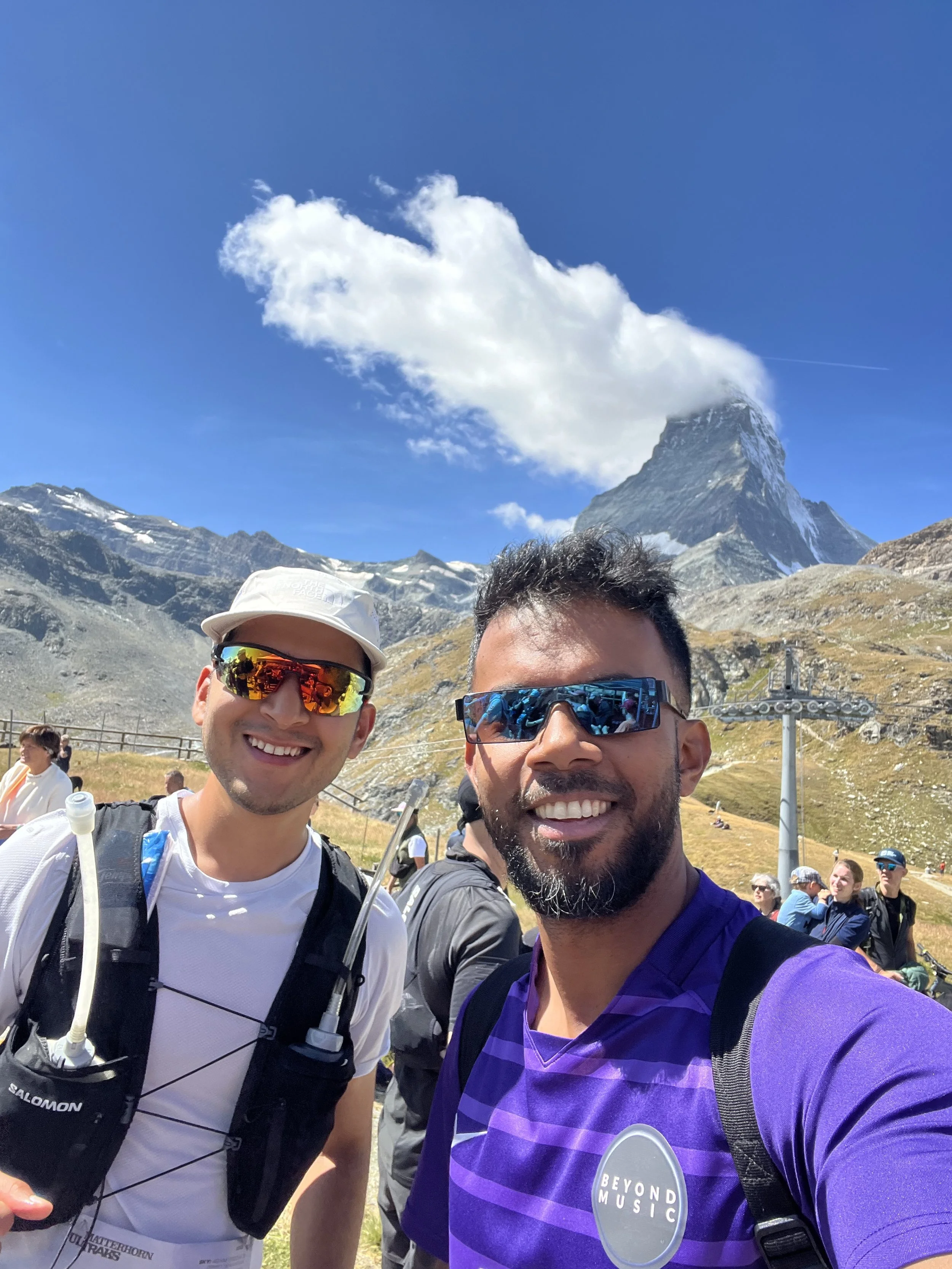
Meeting Ashik at the aid station
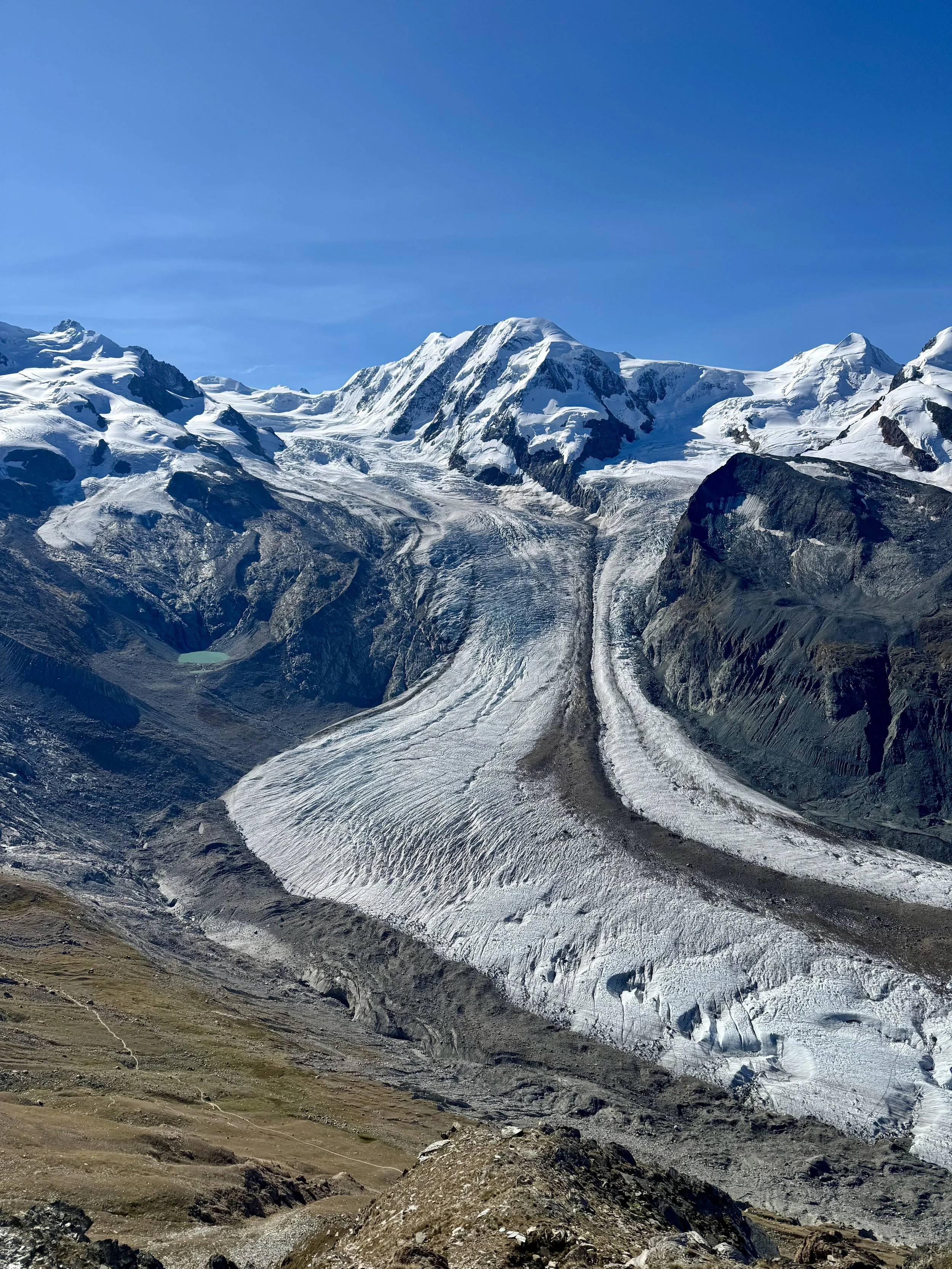
Gorner Glacier
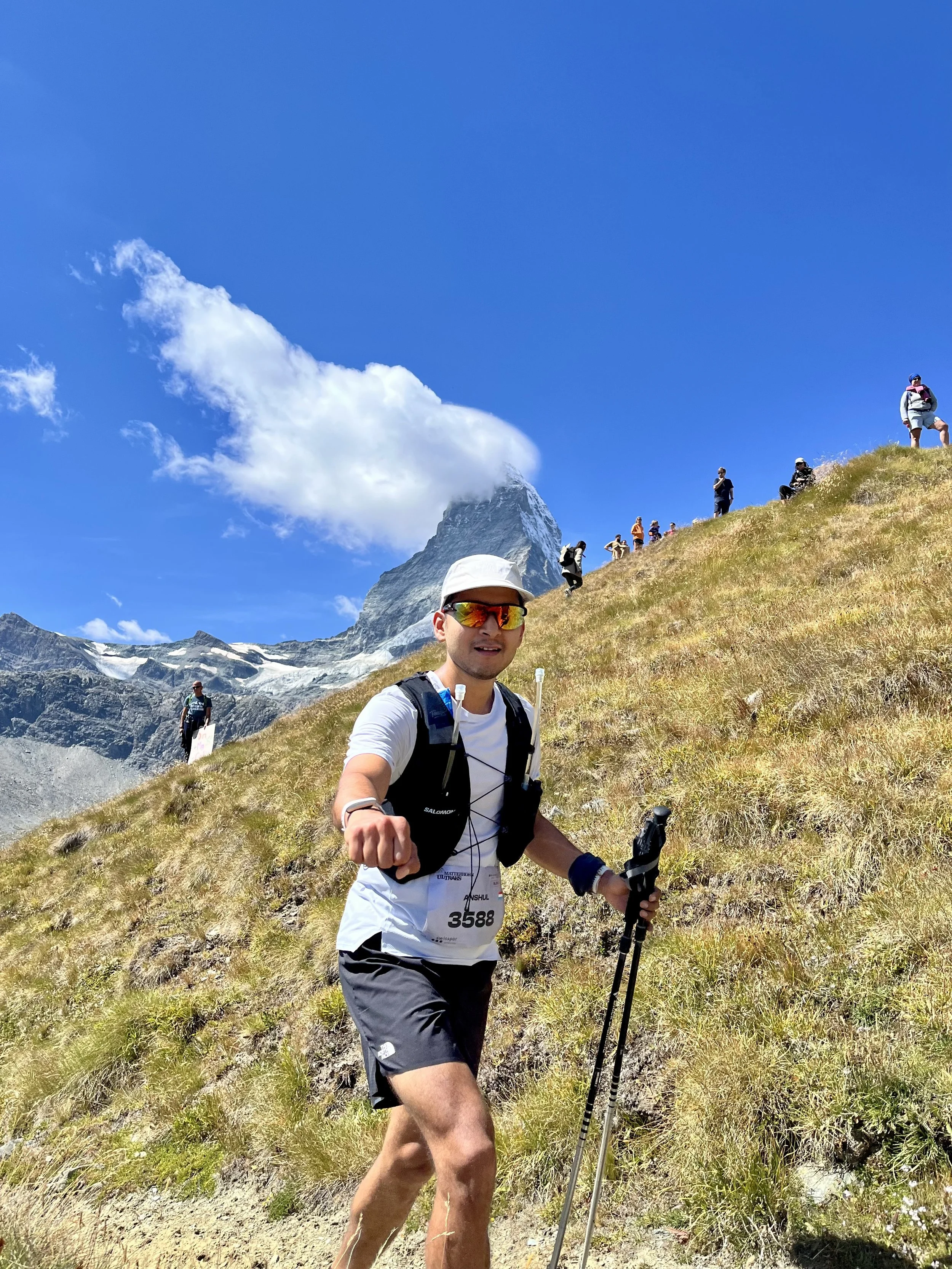
Climbing to Schwarzsee
The Final Push
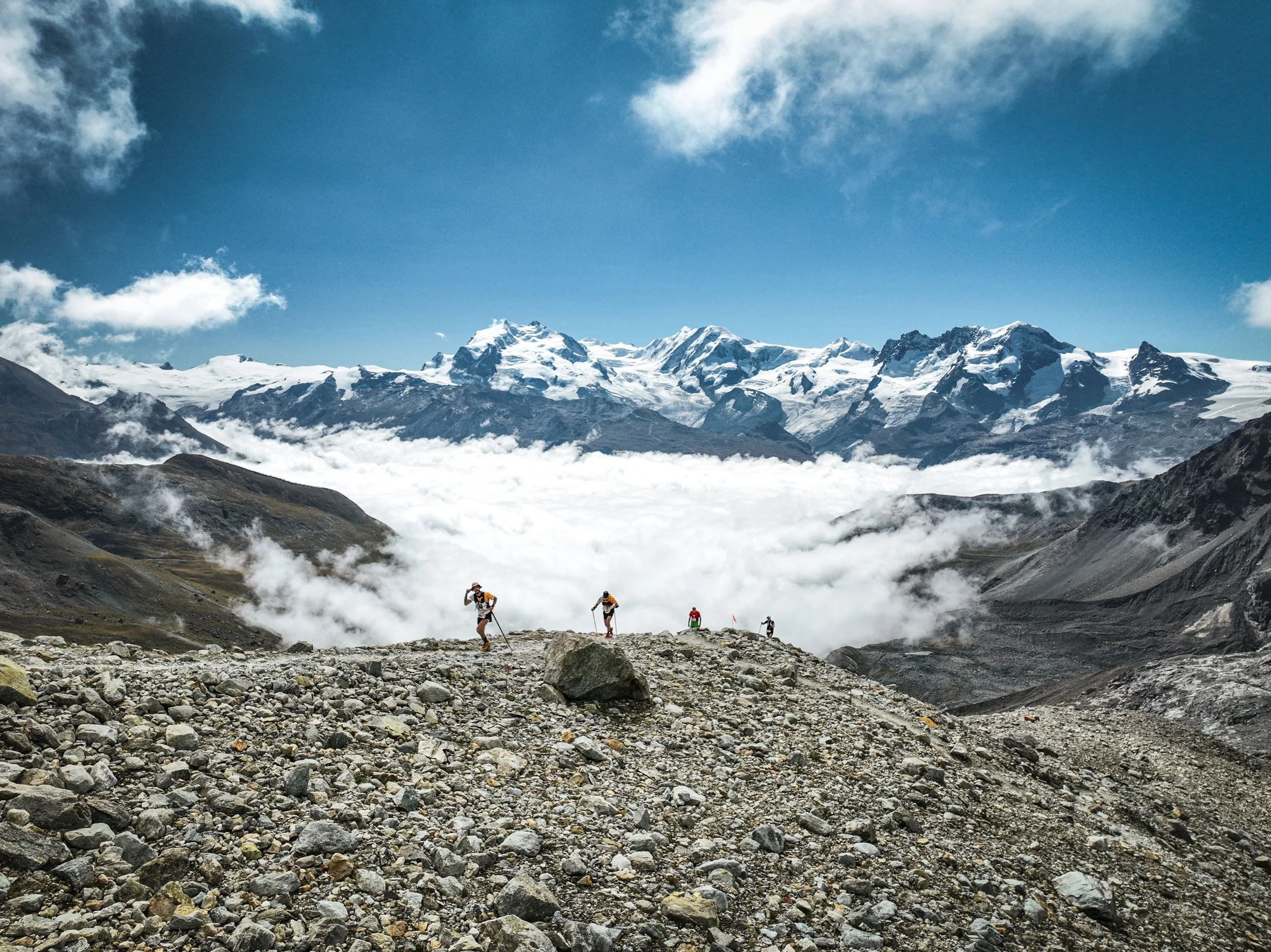
The third climb to Schwarzsee was a grind. Under the midday sun, the trail turns into a vertical line of "ants" moving toward the hotel above. This was where the mental fatigue set in, and where the solitude of the high Alps really tests you.
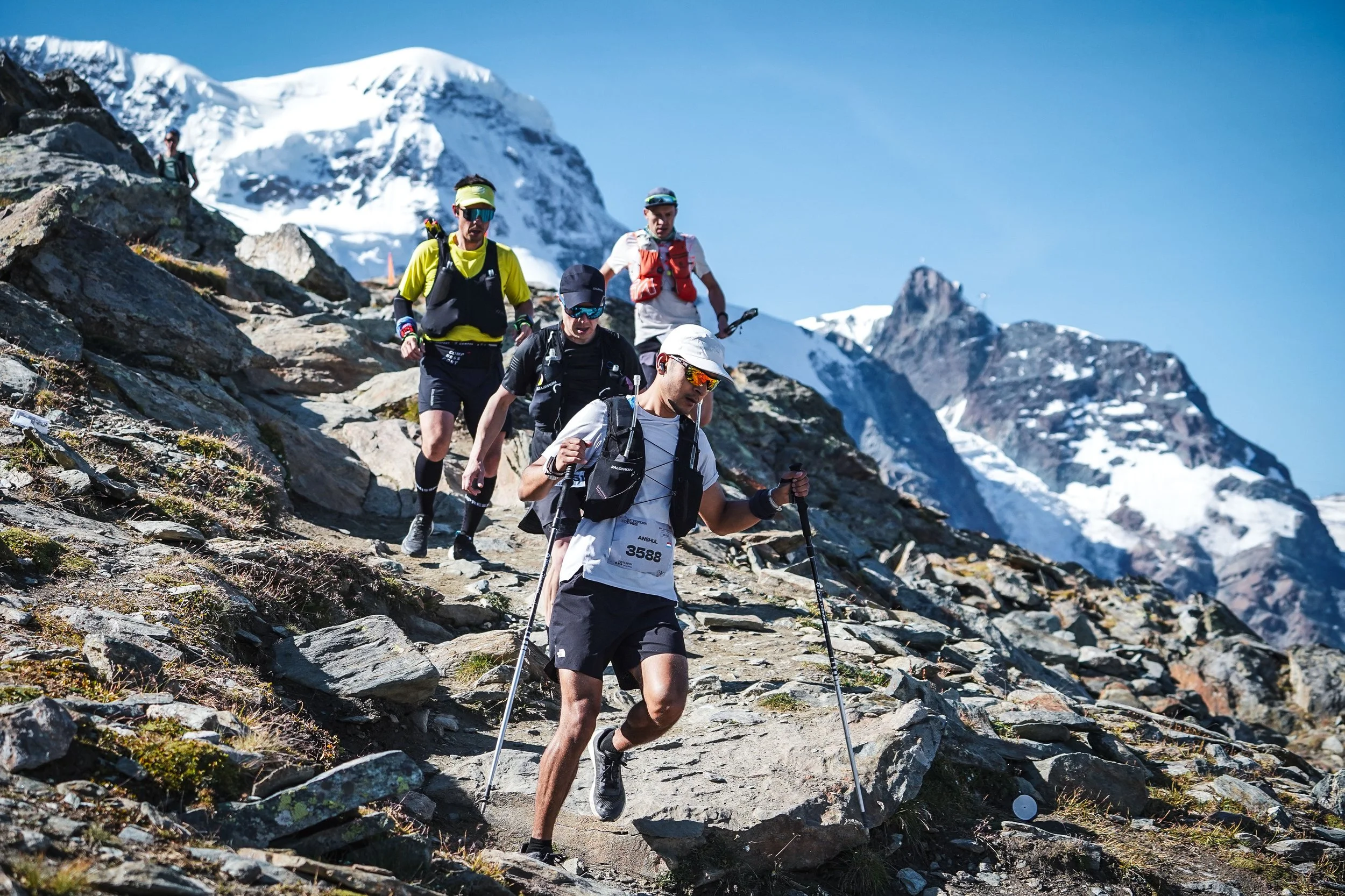
I’ve always struggled with downhills, my knees usually pay the price for my uphill enthusiasm. But as I left the final checkpoint at Trift Hut for the 1,200m descent into town, something clicked. My knees felt strong. I "bombed" the descent, reclaiming positions I’d lost earlier and feeling a second wind I didn't know I had.
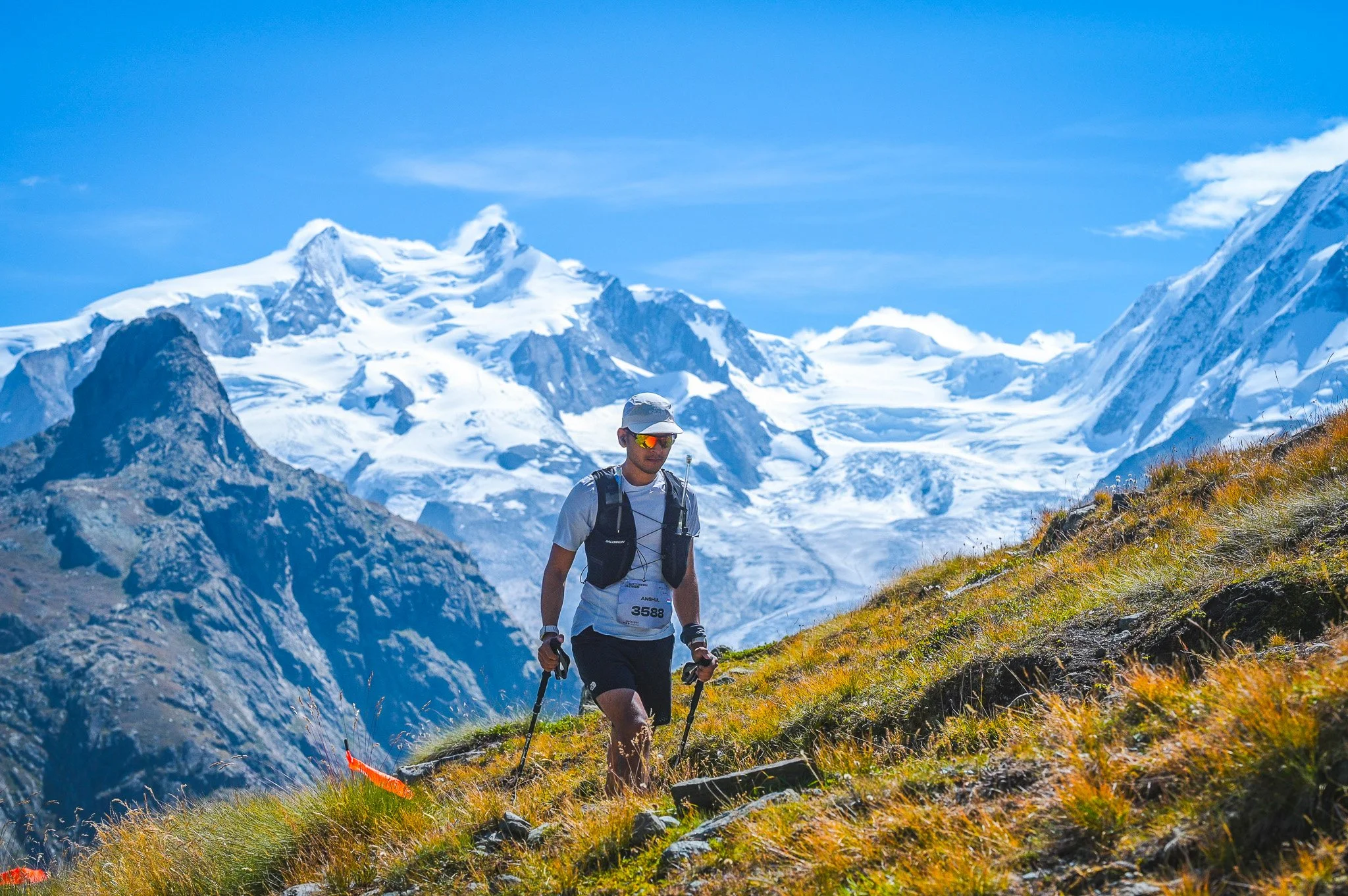
Last big climb to Schwarzsee with Monte Rosa in the background, the tallest peak in Switzerland
Crossing the Arch
Crossing the finish line in Zermatt wasn't just about the medal. It was the culmination of seven months of 5:00 AM alarms, gym sessions, and balancing a career and a family.
I might be a mediocre amateur, but as of today, I’m an ultramarathoner. And honestly? The views were worth every single step.
